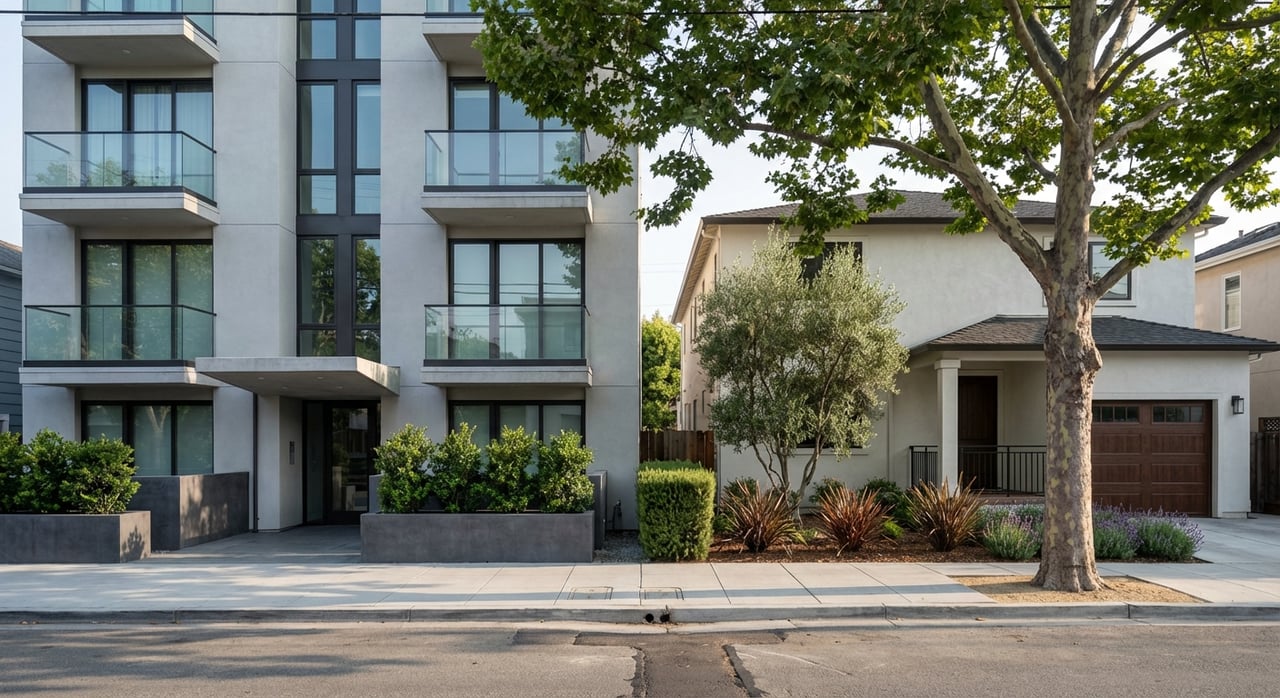
Trying to choose between a condo and a single-family home in San Francisco can feel like a moving target. Prices shift fast, choices are limited, and every option comes with tradeoffs. You want the right fit for your budget and lifestyle without surprise costs or financing roadblocks. In this guide, you’ll learn how these property types differ in price, carrying costs, financing, and resale, plus a simple framework to make a confident choice. Let’s dive in.
San Francisco market snapshot
San Francisco remains a high-cost, inventory-tight market. Recent trackers show a county median sale price around $1.3M as of January 2026, with some short-term medians reported near $1.6–$1.7M in certain months. Single-family homes typically trade at a premium over condos, though the gap varies by neighborhood and building condition. Limited inventory, especially for houses, often leads to multiple-offer situations and quick timelines.
Cost differences: condo vs house
Condos: HOA structure and fees
Condo living shifts much of the exterior and common-area upkeep to the homeowners association. The HOA usually handles the building exterior, shared systems, and a master insurance policy. You carry an HO-6 policy for your unit’s interior improvements, contents, and liability. In California, the Davis-Stirling Act requires common interest developments to conduct a reserve study at least every three years and disclose funding levels. Reviewing the most recent reserve study is critical because a low percent-funded number often signals a higher risk of future special assessments. You can confirm the reserve-study requirement in the statute text on California’s Davis-Stirling site.
HOA dues vary widely in San Francisco. Smaller or lower-amenity buildings can be a few hundred dollars per month. Full-service or high-amenity buildings can reach the high hundreds or more than $1,000. Always model total monthly carry, not just price. A quick reference for building your budget is this San Francisco home affordability overview, which reminds you to include HOA dues, insurance, and taxes.
Single-family: full control, full responsibility
With a single-family home, you control timing and scope for exterior maintenance, roof, systems, and landscaping. That freedom comes with full responsibility. A common planning rule is to set aside roughly 1 percent of the property’s value per year for maintenance and to plan for big-ticket items like roof replacement or seismic upgrades. Use a tool like this California mortgage calculator to model mortgage, taxes, and insurance, then add your maintenance reserve on top.
Insurance trends to watch
Insurance underwriting has tightened in recent years after events like Surfside and major wildfire seasons. Both condo master policies and unit-level policies have seen pressure in some markets. Buyers should review a building’s master policy, deductibles, and carrier stability, especially for older properties. For context on the broader insurance environment, see this roundup of reporting on risk and coverage trends on Muck Rack.
Financing and resale realities
Condo financing and warrantability
Financing a condo is about you and the building. Lenders apply FHA, VA, Fannie Mae, and Freddie Mac standards to the project. If a building has issues like low reserves, active litigation, insurance gaps, or high investor concentration, it may be considered non-warrantable, which limits conventional or FHA/VA loan options. If you plan to use FHA or VA financing, check building eligibility early using HUD’s FHA condo lookup. For a sense of common project red flags that can restrict lending, review this lender bulletin on non-warrantable risk factors.
TICs and co-ops in San Francisco
San Francisco has a notable stock of TICs in older multi-unit buildings. TICs are governed by a TIC agreement and often require specialized fractional loans with stricter underwriting and higher down payments. Treat TICs as a distinct product with their own due diligence requirements, including careful review of the agreement, financing terms, and title.
Resale and buyer pool
Single-family homes often appeal to a broad buyer audience and are generally easier to finance. Well-managed condos in strong locations also resell well. Buildings with weak documents, deferred maintenance, or insurance and litigation issues can narrow the buyer pool, sometimes to cash or portfolio loans, which can affect pricing and time on market.
Neighborhood and lifestyle tradeoffs
- Condos often offer strong walkability, proximity to transit, and on-site amenities like gyms or roof decks. You’ll see deeper condo supply in areas like Hayes Valley, SoMa, South Beach, and parts of the Mission. Downsides include HOA dues, rules, and possible special assessments.
- Single-family homes deliver more privacy, control over renovations, and private outdoor space. They tend to cluster in neighborhoods like Noe Valley, the Richmond and Sea Cliff areas, the Sunset, and Pacific Heights. Downsides include higher upfront prices in many areas and full maintenance responsibility.
Given the wide price range across districts, use neighborhood-level medians to set realistic expectations. Citywide numbers are helpful for context but less useful when you are choosing between specific areas and property types.
A decision framework that works
Use this checklist to match your budget and lifestyle to the right property type:
Budget and financing certainty
- If using FHA or VA, confirm building eligibility on HUD’s FHA condo lookup before you fall in love with a unit.
- If you need a conventional loan, ask your lender about project requirements and any overlays.
Monthly carry modeling
- Model mortgage, property tax, insurance, and HOA dues together. Include a buffer for special assessments or rising insurance costs. This San Francisco affordability guide is a helpful starting point.
Tolerance for shared governance
- For condos, review bylaws, house rules, and at least 12 months of meeting minutes. Confirm reserve funding and upcoming projects. The reserve-study requirement and disclosures are outlined in Civil Code 5550.
Maintenance and retrofit plans
- With a house, you set the schedule and budget. With a condo, the HOA sets common-area projects and can assess owners. In San Francisco, understand soft-story retrofit requirements for older multi-unit wood-frame buildings via the city’s soft-story program page.
Rental and use goals
- If you plan to host short-term rentals, San Francisco requires registration and generally limits hosting to your primary residence. Review the city’s short-term rental guide.
Closing costs and transfer tax
- San Francisco has a progressive documentary transfer tax that increases with price. Factor this into your closing budget by reviewing the city’s recording and fee guidance.
Buyer scenarios in San Francisco
Scenario A: First-time buyer, about $900K–$1.2M
- A condo or a TIC may be your entry point. Confirm building financing eligibility early if you plan to use FHA or a low-down conventional loan. Build HOA dues, master-policy details, and special assessment risk into your monthly budget.
Scenario B: Professional or couple, $1.2M–$1.8M, wants walkability and low yard work
- You may find a well-located condo with amenities or a smaller house or attached home in an outer neighborhood. Compare space and control with a house to amenities and lower day-to-day maintenance with a condo.
Scenario C: Need outdoor space and room, $1.8M+
- A single-family home is the typical path. Expect to budget for updates and plan for ongoing maintenance and possible seismic improvements. Weigh commute, parking, and topography in your neighborhood search.
Scenario D: Investor or pied-à-terre
- High-demand condos can offer liquidity, but San Francisco’s short-term rental rules limit non-owner-occupied strategies. Confirm HOA rental restrictions and review the city’s short-term rental rules before you underwrite returns.
Due diligence checklists
For condos and TICs
- Current HOA budget and bank statements
- Most recent reserve study and percent-funded figure, per Davis-Stirling requirements
- Master insurance policy declarations and deductibles
- Meeting minutes for the past 12 months
- Litigation and special-assessment history
- Lender eligibility and project approval status (FHA, agency, or portfolio)
- Any retrofit or engineering reports for older buildings
For single-family homes
- Full home inspection and roof/system evaluations
- Sewer lateral and foundation checks where applicable
- Permit history from the city’s building department
- Estimate of deferred maintenance and upgrade needs
- Neighborhood-specific risk review, including soft-story context for any multi-unit portions using the city’s soft-story resource
Local rules every SF buyer should know
- Short-term rentals: Registration is required, and hosts generally must be permanent residents of the unit. Review the city’s short-term rental guide.
- Rent stabilization: Many multi-unit buildings built before mid-1979 are rent-stabilized and subject to just-cause protections. Check a unit’s status using the Planning Department’s rent stabilization and eviction protection overview.
- Transfer taxes: San Francisco uses a progressive tiered rate. Confirm the applicable tier for your price bracket using the city’s recording and fee guidance.
The bottom line
If you prioritize a lower entry price, amenities, and lighter day-to-day maintenance, a condo can be the smart move. If you want privacy, outdoor space, and full control over your property, a single-family home is likely the better fit. Either way, your best decision comes from clear budgeting, careful review of building or property health, and early verification of financing.
Ready to compare real options in your target neighborhoods and budget? Connect with The Canlas Brothers to get a step-by-step plan tailored to your goals.
FAQs
What are the biggest monthly cost differences between condos and houses in San Francisco?
- Condos add HOA dues and rely on the HOA’s master policy, while houses shift all exterior maintenance and full building insurance to you, so budget for both scenarios.
How do I check if a condo qualifies for FHA or VA financing?
- Use HUD’s public FHA condo lookup to see if the project is approved, and ask your lender about any additional requirements.
What HOA documents should I review before buying a condo?
- Request the current budget, reserve study, bank statements, insurance declarations, 12 months of meeting minutes, litigation history, and any special-assessment notices.
How do San Francisco short-term rental rules affect buying an investment condo?
- The city requires registration and generally limits hosting to your primary residence, so non-owner-occupied STR strategies are restricted; verify HOA and city rules first.
Why do some condos get labeled non-warrantable by lenders?
- Common red flags include low reserves, active litigation, insurance gaps, high investor concentration, or too much commercial space, which can limit conventional financing.