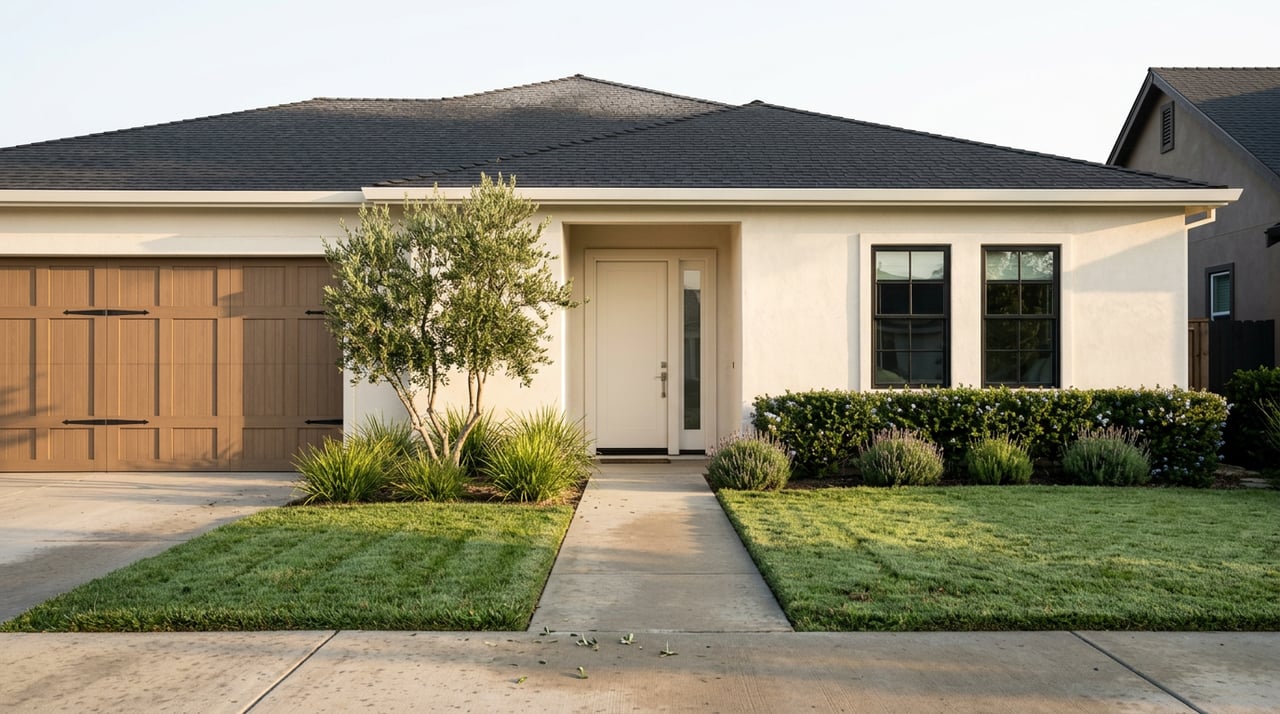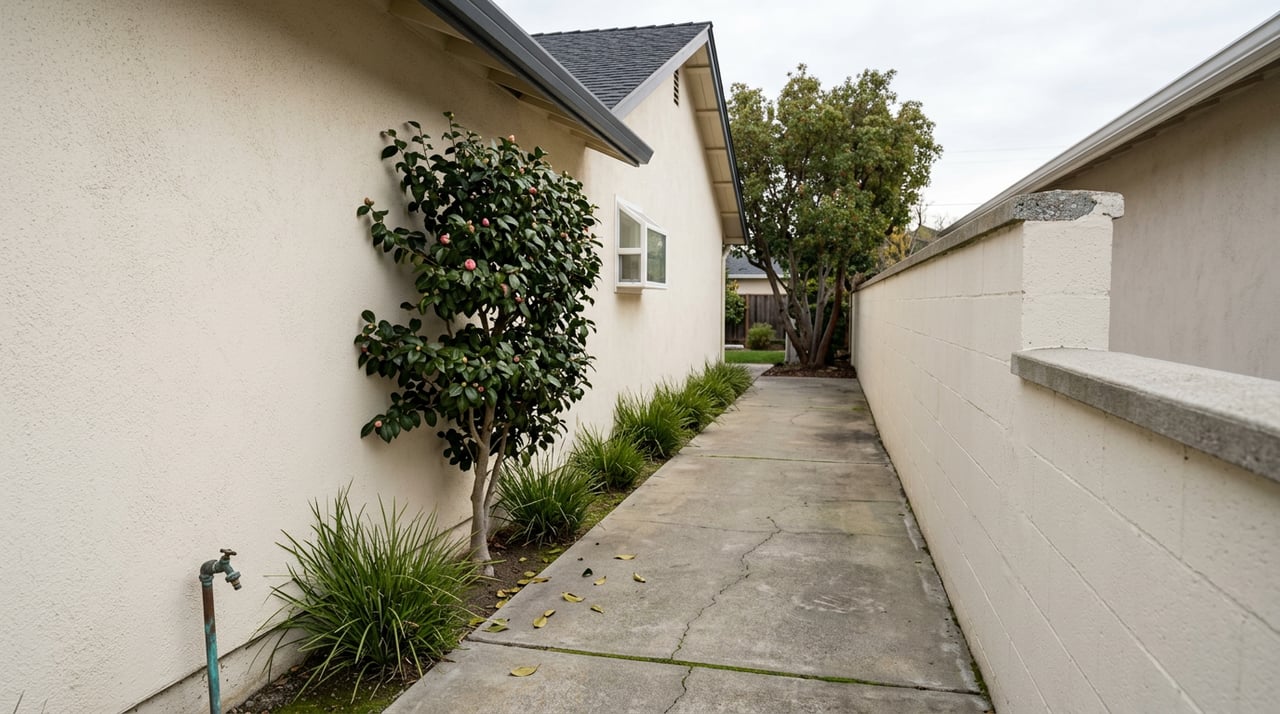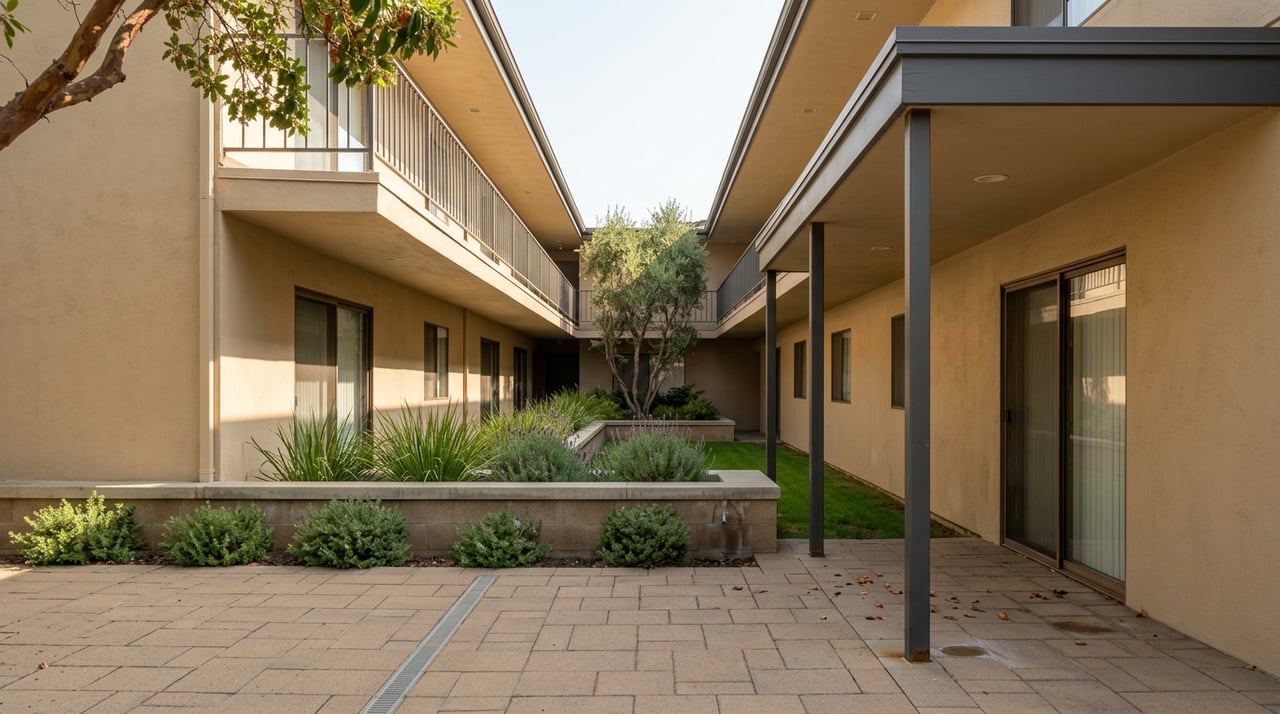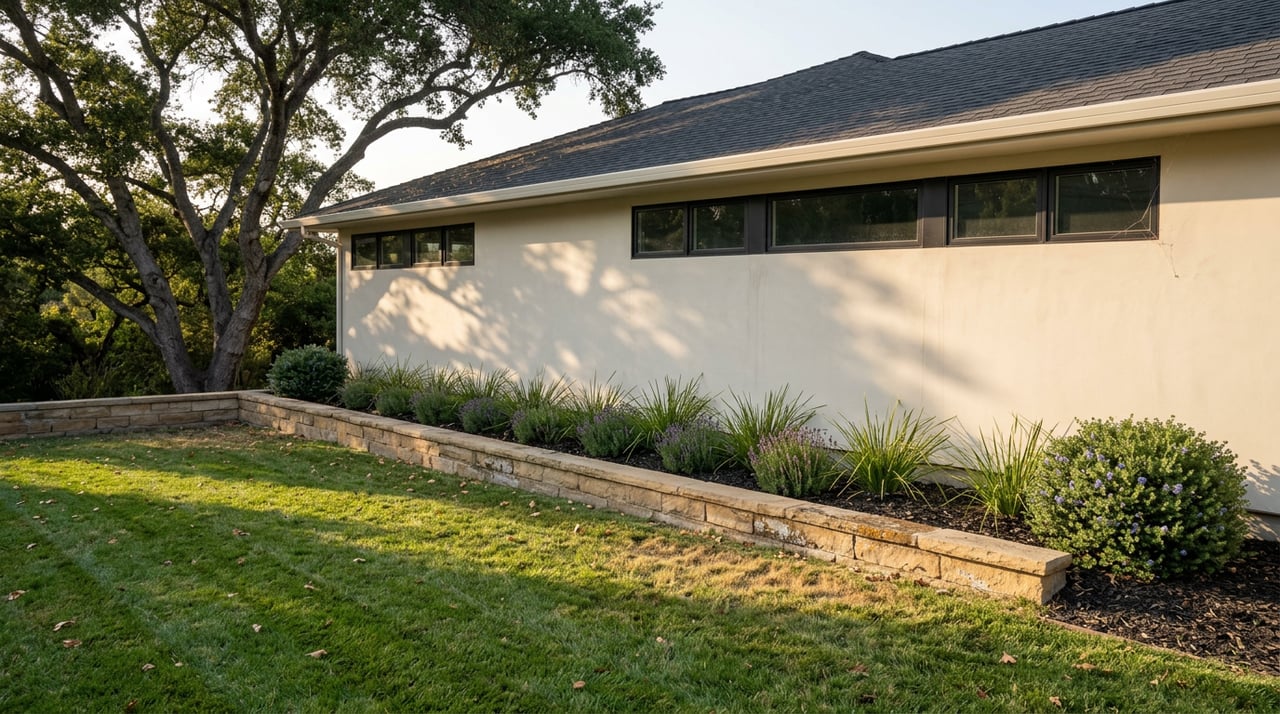
Picture two lots that hit the market in San Carlos the same week. One sits in Howard Park, flat and walkable, 5,200 square feet a few blocks off Laurel Street. The other is up in Cordilleras Heights, a hillside parcel of 9,000 square feet with mature oaks and a peek of the Bay. The Cordilleras Heights lot costs more to buy, and it costs more per square foot too. Under the city's own zoning formula, it also lets its owner cover a smaller share of that land with a house.
That is not a typo, and it is not a quirk of one particular street. It is how San Carlos's Single-Family House Size Study works, an ordinance the City Council adopted on November 13, 2018 after two years of neighborhood meetings, a resident advisory committee, and public testimony from people worried that new houses were getting too big for their lots. The rule solved that problem by capping every house at half its lot, but it built in a bonus for smaller parcels that larger parcels never receive. Anyone comparing a flatland fixer to a hillside estate in this city needs to understand that bonus before they run the numbers on a remodel or a rebuild.
The Formula Behind Every Remodel Permit
San Carlos calculates maximum floor area with two different rules depending on lot size, and the split happens at 7,500 square feet. For a lot at or under that size, the maximum is whichever number is larger: 1,100 square feet plus 35 percent of the lot area, or a flat 50 percent of the lot area. For anything above 7,500 square feet, there is no choice involved. The maximum is a flat 50 percent, period.
That flat-50-percent rule sounds simple enough that most buyers assume it applies uniformly across the city. It does not. The small-lot formula's fixed 1,100-square-foot head start means that on a modest parcel, the percentage of land you are allowed to build on is often well above 50 percent, and it only drifts down toward that floor as the lot gets bigger.
Running the ordinance's own formula across a range of lot sizes makes the pattern visible:
| Lot Size | Maximum Floor Area | Share of Lot |
|---|---|---|
| 5,000 sq ft | 2,850 sq ft | 57% |
| 6,000 sq ft | 3,200 sq ft | 53% |
| 7,000 sq ft | 3,550 sq ft | 51% |
| 7,500 sq ft | 3,750 sq ft | 50% |
| 8,000 sq ft | 4,000 sq ft | 50% |
| 10,000 sq ft | 5,000 sq ft | 50% |
| 12,000 sq ft | 6,000 sq ft | 50% |
These figures come straight from the city's own Single-Family House Size Study formula and do not account for site-specific exemptions or the Residential Design Review Committee's separate review of projects that cross certain thresholds. A San Carlos buyer or their contractor should always confirm the applicable number with the Planning Division before finalizing renovation plans.
Why the Percentage Shrinks as the Lot Grows
The math above answers a question most buyers never think to ask: why does a bigger lot not simply buy a proportionally bigger house allowance? The answer is that the two formulas cross paths at roughly 7,333 square feet. Below that point, the 1,100-square-foot flat bonus keeps the small-lot formula ahead of the 50 percent line, and every lot that qualifies gets to build a larger share of itself than a bigger lot ever will. Above that point, the flat 50 percent rule takes over and never changes again, no matter how much larger the lot gets from there.
In practice, that means a 5,000-square-foot lot in an older San Carlos neighborhood can support a house covering 57 percent of the land, while a 12,000-square-foot hillside lot, priced at a real premium, is locked at exactly 50 percent forever. The extra land in Cordilleras Heights buys view, privacy, and yard. It does not buy proportionally more house.
The Second Gate: Building on a Slope
The math cap is only the first constraint a hillside buyer runs into. San Carlos's larger, elevated lots concentrated in Cordilleras Heights and the western foothills sit on sloped terrain, and slope triggers a separate layer of review under the California Building Code: a geotechnical or soils report evaluating whether the ground can support the structure a buyer wants to build. That report is not a rubber stamp. Geotechnical consultants who work hillside sites across California commonly quote a range of $10,000 to $20,000 or more for a hillside investigation, well above the $3,000 to $6,000 typical for a flat lot. The report also takes time, and a project cannot move to permit review until it clears.
Put the two constraints together and the picture sharpens. The hillside lot that costs more to buy, per square foot, is capped at the lowest floor-area percentage the ordinance allows, and it requires an additional five-figure report before construction can even be designed around that capped number. None of that shows up on a listing sheet.
San Carlos's sub-neighborhoods illustrate how directly this connects to lot size and terrain:
- White Oaks and Howard Park sit close to downtown on smaller, flatter parcels, generally in the range that benefits most from the 1,100-square-foot bonus.
- Eaton runs roughly 5,000 to 7,000 square feet, a post-war flatland pocket that also lands squarely in the favorable formula range.
- Beverly Terrace typically runs 6,000 to 8,500 square feet, straddling the crossover point depending on the individual parcel.
- Cordilleras Heights, at higher elevation with lots commonly between 7,500 and 12,000 square feet, is where the flat 50 percent rule and the hillside geotechnical requirement both apply at once.
- Oak Park rounds out the city's older, walkable pockets with lot sizes closer to the small-lot end of the scale.
What This Means for Anyone Underwriting a Remodel or Rebuild
San Carlos is not a market where floor-area math is a minor detail. Redfin's data for the three months ending July 2026 put the city's median sale price at $2.5 million, with homes selling in about 12 days. Local single-family closings tracked through the San Mateo County Association of Realtors and MLSListings showed a July 2026 median of roughly $2.7 million, with homes averaging 22 days on market and closing at 109 percent of list price. Land in this city is expensive by any measure, and inventory has stayed tight enough that competitive offers are still the norm rather than the exception.
When every square foot of lot costs this much, the percentage of that lot you are legally allowed to build on stops being a paperwork detail and becomes part of the underwriting. A buyer comparing a smaller in-town lot against a larger hillside one should run both scenarios: the smaller lot's more generous floor-area formula against its lower purchase price, and the larger lot's flat 50 percent cap plus a hillside geotechnical bill against its premium price and its view. The lot that looks like more house on paper is not always the lot that delivers more usable floor area once the ordinance and the soils report are factored in.
One detail worth building into any renovation plan either way: up to 250 square feet of unenclosed, unroofed decks aligned with or below the lowest floor level are exempt from the lot coverage calculation entirely. That gives owners on either side of the 7,500-square-foot line a way to add usable outdoor space without eating into the floor-area cap.
A Few Questions We Get From Buyers
What lot size triggers the flat 50 percent rule instead of the bonus formula? Any lot over 7,500 square feet uses the flat 50 percent rule with no exceptions. Lots at or under 7,500 square feet use whichever is larger between that flat 50 percent and the 1,100-square-foot-plus-35-percent formula, which in practice almost always favors the smaller lot.
Does the hillside geotechnical requirement apply everywhere in San Carlos? It is concentrated in the elevated, sloped parcels of Cordilleras Heights and the western foothills. Flatland neighborhoods like White Oaks, Howard Park, Eaton, and most of Oak Park do not typically face the same slope-triggered review, though any project's specific requirements are determined by the Planning Division and a licensed geotechnical engineer.
Do decks or patios count against the maximum floor area? Up to 250 square feet of unenclosed, unroofed decks at or below the lowest floor level are specifically exempted from the city's lot coverage calculation, giving owners some flexibility outside the capped floor area.
If you are comparing a flatland fixer against a hillside lot in San Carlos, or trying to figure out what a given parcel actually lets you build, the math is worth running before you write an offer, not after. The Canlas Brothers work through this kind of lot-by-lot underwriting with buyers and investors across San Carlos every week. Schedule your free Home Strategy Consultation and we will walk your specific address through the formula together.