For the three months ending July 2026, San Carlos's median sale price came in at $2.5 million, down 0.75 percent from the same stretch a year earlier. On paper, that reads like a market catching its breath after years of relentless appreciation. Anyone skimming the headline number could reasonably conclude San Carlos cooled off in 2026.
The same report tells a different story if you keep reading. The median price per square foot climbed 37 percent year over year. The average sale price for July 2026 was up 20.2 percent over July 2025. And San Carlos moved 94 homes in July, up from 79 the year before. A market that's cooling doesn't usually sell more houses at higher prices per square foot while its headline median sits still. Something else is happening, and it isn't visible from the citywide row on a market report. It's visible one neighborhood down, where Howard Park and White Oaks have been quietly arguing over which one deserves San Carlos's price crown for more than a decade.
The Problem With Averaging Nine Sales a Month
San Carlos is a small city, and its neighborhoods are smaller still. Howard Park, one of the two flagship flats neighborhoods along Laurel Street, sold nine homes in March 2026. It also sold nine homes in March 2025. Same volume, same month, one year apart. And yet the average sale price for that single month jumped 68.9 percent year over year, while the median rose a comparatively modest 10.8 percent to $2.6 million.
Nine home sales don't describe a trend. They describe whichever nine houses happened to close escrow that month, and in a neighborhood with a few dozen transactions a year, one remodeled Eucalyptus Avenue rancher selling next to a modest starter can swing the average by six figures without the underlying market moving at all.
This is the mechanism the citywide median can't show you. San Carlos as a whole sells somewhere in the range of 60 to 90 homes a month depending on the season. That's enough volume to smooth out noise at the city level. Drop down to a single neighborhood, and the sample size gets thin enough that a single estate sale or a single fixer can move the number more than twelve months of actual market conditions.
A Crown That's Changed Hands Before, Quietly
Howard Park and White Oaks sit next to each other, separated mostly by Brittan Avenue, and for most of San Carlos's history White Oaks was the neighborhood everyone pointed to first. It had the pre-war bungalows, the tree canopy, the reputation. Then, in 2010, Howard Park overtook it, becoming the neighborhood with the highest price per square foot in San Carlos, a position it has held since. Nobody announced that shift with a press release. It showed up gradually, sale by sale, in a number that never appears on a citywide report.
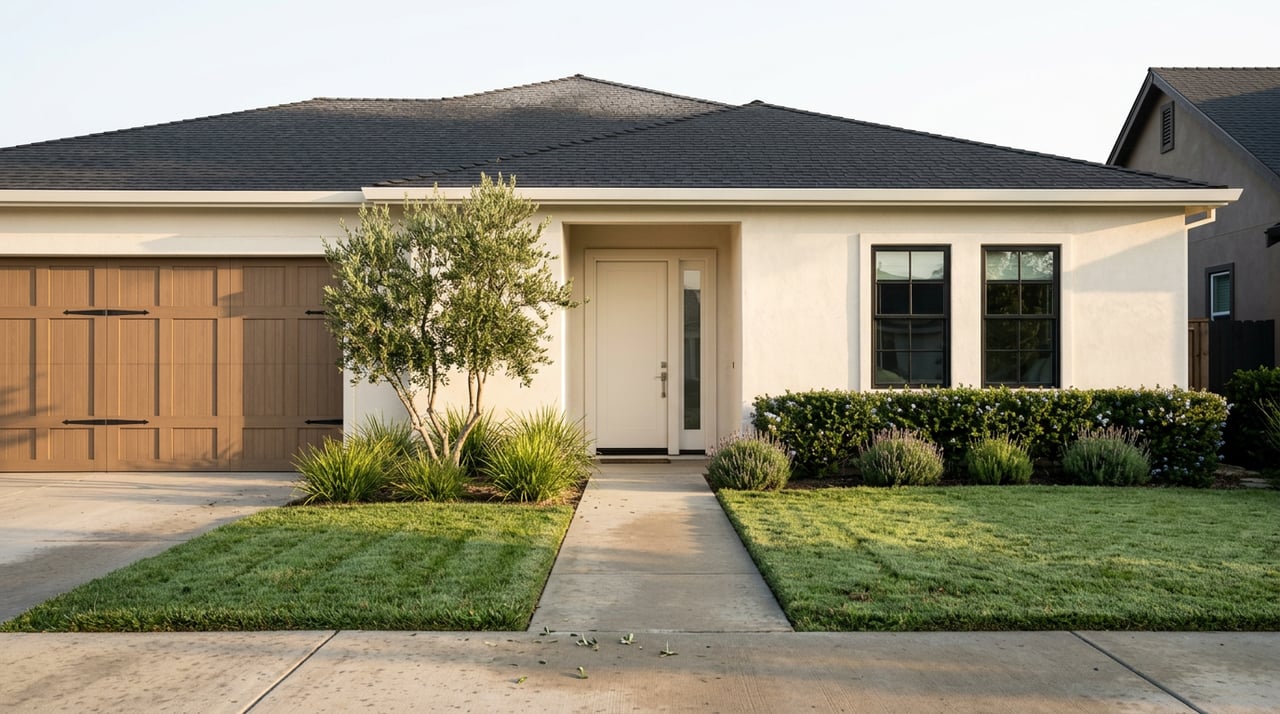
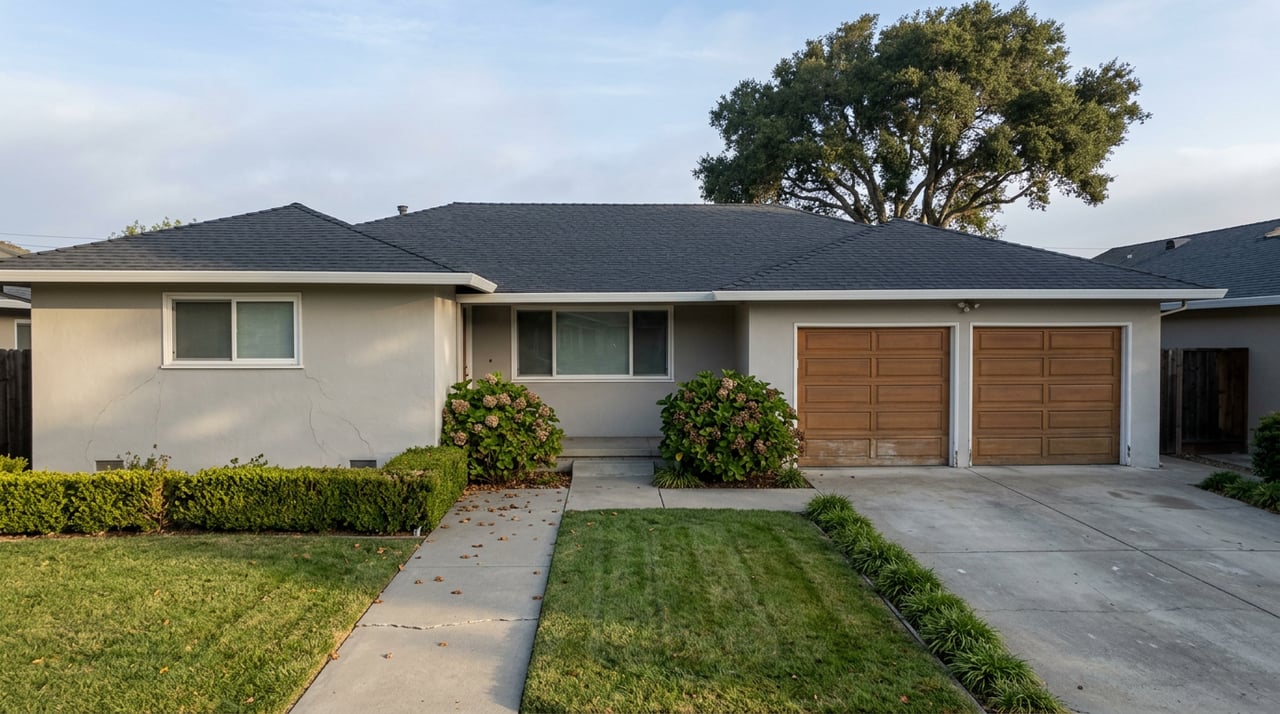
Howard Park runs from Brittan Avenue north to San Carlos Avenue, bordered by El Camino Real and Alameda de las Pulgas. It's flat, walkable, and a few blocks from Burton Park and the Laurel Street restaurant corridor. Housing stock is mostly post-war ranch homes on lots around 5,000 square feet, many of them updated. It's also home to one of the Peninsula's more memorable seasonal traditions: Eucalyptus Avenue draws hundreds of trick-or-treaters every Halloween and turns into a lit-up destination street at Christmas. Near downtown, the neighborhood blends into multi-use zoning that includes condo buildings like Wheeler Plaza and 1001 Laurel Street.
White Oaks, just south across Brittan, has an older architectural identity built on bungalows constructed between 1920 and 1950, many under 2,000 square feet before renovation, with larger homes on the creek side of Eaton Avenue reaching closer to 3,000 square feet. It's also known by its older name, El Sereno Corte. New construction from local builders has added a second tier of larger homes at the neighborhood's edges.
Both are considered part of San Carlos's flats. Both feed into Central Middle and, for most addresses, Sequoia Union High School District's San Carlos High. And both are functionally different products even though they sit blocks apart, which is exactly why one citywide median can't represent either of them well.
| Tier | Typical price band | What you're buying |
|---|---|---|
| Howard Park | $2.2M to $3.0M+ for renovated ranch homes | Flat walkable blocks, Burton Park proximity, post-war lots near 5,000 sq ft |
| White Oaks | $1.5M to $2.5M+ for original bungalows, $3M+ for newer builds | Pre-war architecture, creek-adjacent lots on Eaton Avenue, mixed vintage |
| Hillside (Beverly Terrace, San Carlos Hills) | $2.8M to $4.5M+ | Bay and peninsula views, larger lots, less walkability, winding streets |
The hillside tier, anchored by Beverly Terrace and the San Carlos Hills, runs on a completely different logic. April 2026 MLS data put that tier's range at roughly $2.8 million to $4.5 million and beyond, driven by lot size and view rather than proximity to Laurel Street. Some pockets, like Devonshire Canyon, have narrow roads without sidewalks, and residents there trade walkability for privacy and access to the Eaton and Big Canyon trail system, which covers more than 73 acres of open space. None of that variation shows up in a single median. It's the reason two buyers with the same budget can end up in entirely different versions of San Carlos.
The Boundary Line That Costs More Than the Line Itself
Within the flats, a second layer of pricing sits underneath the neighborhood split: the elementary school catchment line. As of 2026 reporting, homes assigned to San Carlos's top K-8 catchments, which include Arundel, Arroyo, White Oaks, and Heather, have carried a documented price premium of roughly 5 to 10 percent over otherwise comparable homes just outside those boundaries. Brittan Acres Elementary and Central Middle carry a similar effect. This isn't a claim about which school is better. It's a pricing pattern that shows up in comparable sales, the same way a flat lot or an updated kitchen shows up in comparable sales, and it means two houses on the same block can carry meaningfully different price tags depending on which side of an attendance line they fall on.
At the high school level, the premium is smaller but still measurable, and it matters most in Beverly Terrace, where the San Carlos High and Carlmont High boundary runs through the hillside neighborhood itself. Anyone shopping that area should confirm the exact boundary for a specific address before writing an offer, since attendance zones don't always follow the lines a map might suggest.
How to Read a San Carlos Listing Without the Citywide Number Fooling You
A flat citywide median in 2026 doesn't mean San Carlos slowed down. It means the number stopped being useful on its own. Before drawing a conclusion from it, a few checks are worth running:
- Compare price per square foot within the specific neighborhood, not the citywide average, since composition shifts between flats and hillside can move the city number without changing either submarket's real trajectory.
- Check how many homes actually sold in that neighborhood over the relevant window. A monthly count under ten means the median or average can swing on a single sale.
- Confirm school catchment by exact address rather than by neighborhood name, since boundaries don't always match the informal map in a listing description.
- Look at list-to-sale ratio at the neighborhood level. San Carlos overall has been running roughly 6 percent over list on average sales and higher on competitive listings, but that number compresses or expands differently in Howard Park than it does in the hills.
San Carlos's headline median will keep doing what it's done all year: sitting still while the neighborhoods underneath it keep moving in different directions. Reading only the top line is how a buyer ends up either overpaying for a flats premium they didn't know existed or walking away from a hillside deal that looked expensive on paper but wasn't, once the comparison was run against the right nine houses instead of the wrong six hundred.
A Few Questions We Get From Buyers
Does a flat median mean San Carlos is cooling down? Not based on the rest of the same report. Sales volume was up 19 percent year over year in July 2026, and price per square foot rose sharply in the same window. A flat median with rising volume and rising per-square-foot pricing points to a market shifting in composition, not one losing demand.
Is Howard Park always going to be pricier than White Oaks? Not necessarily. The two neighborhoods have swapped the price-per-square-foot lead before, with Howard Park taking it from White Oaks back in 2010. Given how thin the monthly sales volume runs in both, a strong quarter for one and a quiet quarter for the other can shift the comparison again without either neighborhood fundamentally changing.
Is the hillside tier ever the better value? It depends entirely on what a buyer is optimizing for. Per square foot, the flats generally cost more because of walkability and lot scarcity. The hillside tier trades that walkability for larger lots, views, and more space per dollar in raw square footage, along with a longer walk or drive to Laurel Street.
If you're comparing San Carlos neighborhoods and want the actual comps for the specific block or catchment you're considering, rather than a citywide average that's smoothing over the real story, The Canlas Brothers can walk through the current numbers for Howard Park, White Oaks, or the hillside tier and show you what your budget buys in each. Schedule your free Home Strategy Consultation to get started.